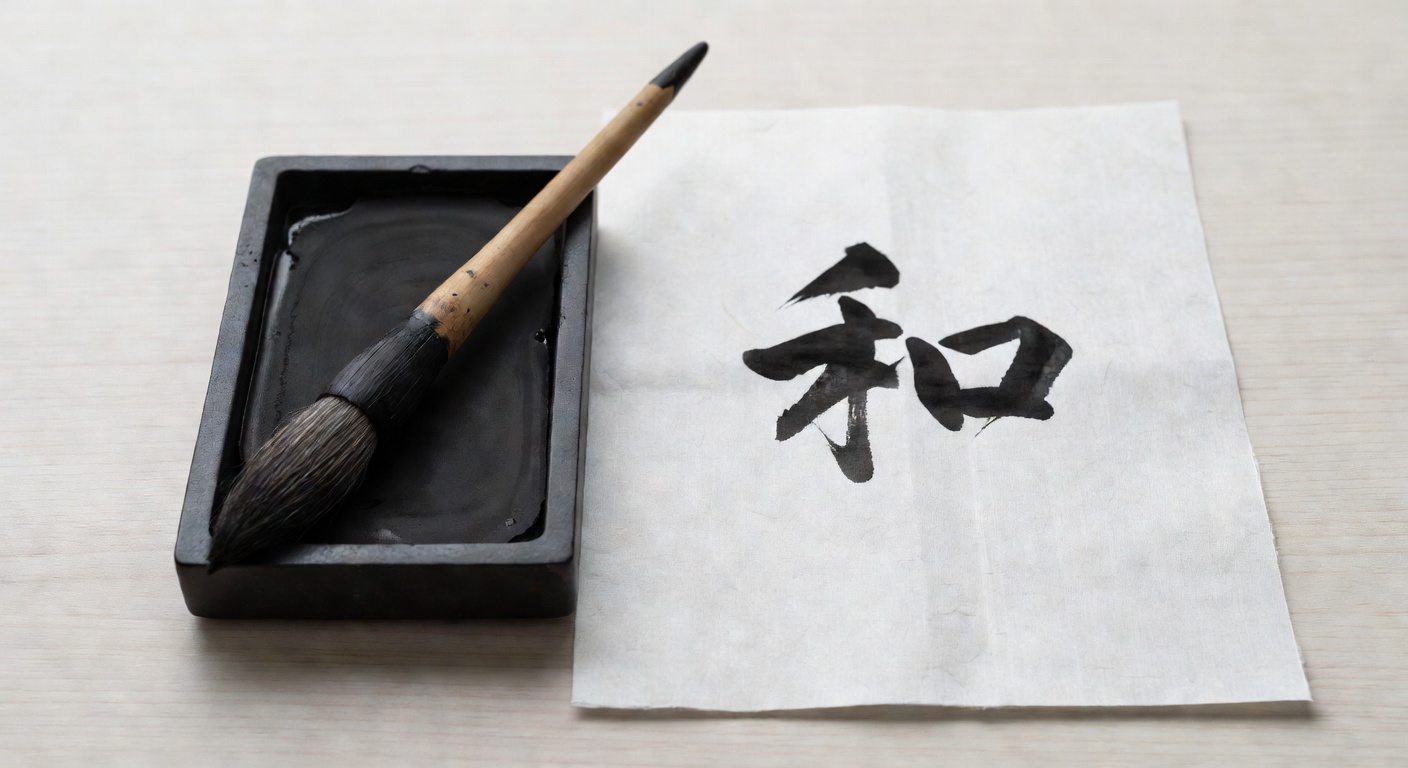
In a quiet studio in Meguro, Tokyo, Tanaka Keiko dips a broad-tipped brush into a stone inkwell and pauses. The pause itself is part of the practice. In shodo — Japanese calligraphy — the moment before the brush meets the paper is as important as the stroke itself. It is a moment of mental preparation, of alignment between mind, body, and intention. Then the brush descends, and in a single fluid motion, a character takes form.
Tanaka is sixty-three years old and has practised shodo for over four decades. She teaches twice weekly at a community centre, where her students range from elementary school children to retired professionals. "People come for many different reasons," she says. "Some come because they want to improve their handwriting. Others come because they feel something is missing — a quality of attention that their daily life does not provide."
An Ancient Art in Modern Context
Shodo (書道) — literally "the way of writing" — has roots stretching back over a millennium in Japan, with formal traditions imported from China and gradually transformed into something distinctly Japanese. For much of Japan's history, calligraphy was considered one of the essential accomplishments of an educated person, alongside music and poetry. The quality of one's brushwork was understood to reflect not only skill but character.
That intimate connection between handwriting and selfhood has not disappeared, but it has been displaced. Today, the average Japanese professional writes almost nothing by hand at work. Text messages, emails, and word-processed documents have replaced letters and personal notes. For many people under forty, the kanji characters they once laboriously practised in school are increasingly difficult to recall without the aid of a digital keyboard's suggestions.
"When you write by hand, you must slow down. That slowness is not a disadvantage — it is the point."
— Tanaka Keiko, calligraphy instructor
The Paradox of Resistance
It might seem that digital culture would be simply hostile to an art form that requires unhurried physical practice. Yet the evidence suggests a more complex picture. Enrolment in shodo classes across Japan has remained stable over the past decade, with some schools reporting increased interest among younger students — particularly those who work in digital environments and find themselves drawn to the physicality and slowness of brush writing as a form of respite.
This parallels a broader trend visible in other traditional crafts. Ceramics, weaving, lacquerwork, and woodblock printing have all seen renewed interest in recent years, particularly among urban professionals in their twenties and thirties. The common thread is not nostalgia but, rather, a desire for practices that engage the full attention and the senses — practices that resist the fragmentation and speed of the digital environment.
The Question of Preservation
For educators and cultural organisations, however, the picture is more complicated. The number of qualified shodo teachers has declined as older practitioners retire without sufficient successors. The institutional pathways that once made calligraphy instruction standard — its presence in school curricula, its place in formal certificates and examinations — have been eroded by curriculum reforms that prioritise other skills.
There are those who argue that shodo must adapt its forms and contexts to survive. Some practitioners have begun using calligraphic techniques in graphic design, street art, and digital illustration, bringing the brush's expressive qualities into new visual contexts. Others have established online teaching platforms, reaching students in rural areas or overseas who lack access to local instruction.
Tanaka herself is cautious about these developments, though not dismissive. "The form can change," she says. "What must not change is the quality of attention — the care you bring to each stroke. If that is preserved, the art lives. If it is lost, no amount of clever adaptation will save it."
She dips her brush again. The pause. The descent. The character forms in a single, unhurried breath.