There is a particular quality to the light in Japan in early April — a soft, diffuse brightness that passes through the pale pink canopy of cherry blossoms and settles on everything below. It is one of the most photographed spectacles in the natural world, attracting millions of visitors to parks and riverbanks across the country each year. Yet for many Japanese people, what makes the experience meaningful is not the blossoms at their peak, but the moment just before they fall.
This awareness — the recognition that beauty is inseparable from its own passing — is central to what the literary scholar Motoori Norinaga, writing in the eighteenth century, called mono no aware (物の哀れ). Often translated as "the pathos of things" or "an empathy toward things," it describes a particular emotional response to the beauty of the transient: a kind of tender sadness that is also, paradoxically, a form of joy.
The Aesthetics of Impermanence
Japan's four strongly distinct seasons have, over centuries, created a cultural sensitivity to change and passage that permeates art, literature, poetry, and everyday life. The cherry blossom (sakura) is the most well-known symbol of this sensibility, but it is only one among many. The acer leaves of autumn (momiji), the first snowfall of winter, the call of the cicada in summer — each marks a moment in the year's passage, and each carries its own emotional weight.
In classical Japanese poetry, a form of verse called haiku captures these moments with remarkable economy. The poet Matsuo Bashō, regarded as the master of the form, frequently employed natural imagery to evoke the feeling of impermanence. His most celebrated haiku — "An old silent pond / A frog jumps into the pond — / Splash! Silence again" — conveys in seventeen syllables the contrast between stillness and movement, presence and absence, the eternal and the momentary.
"The old pond —
a frog jumps in,
sound of water."
— Matsuo Bashō, 1686
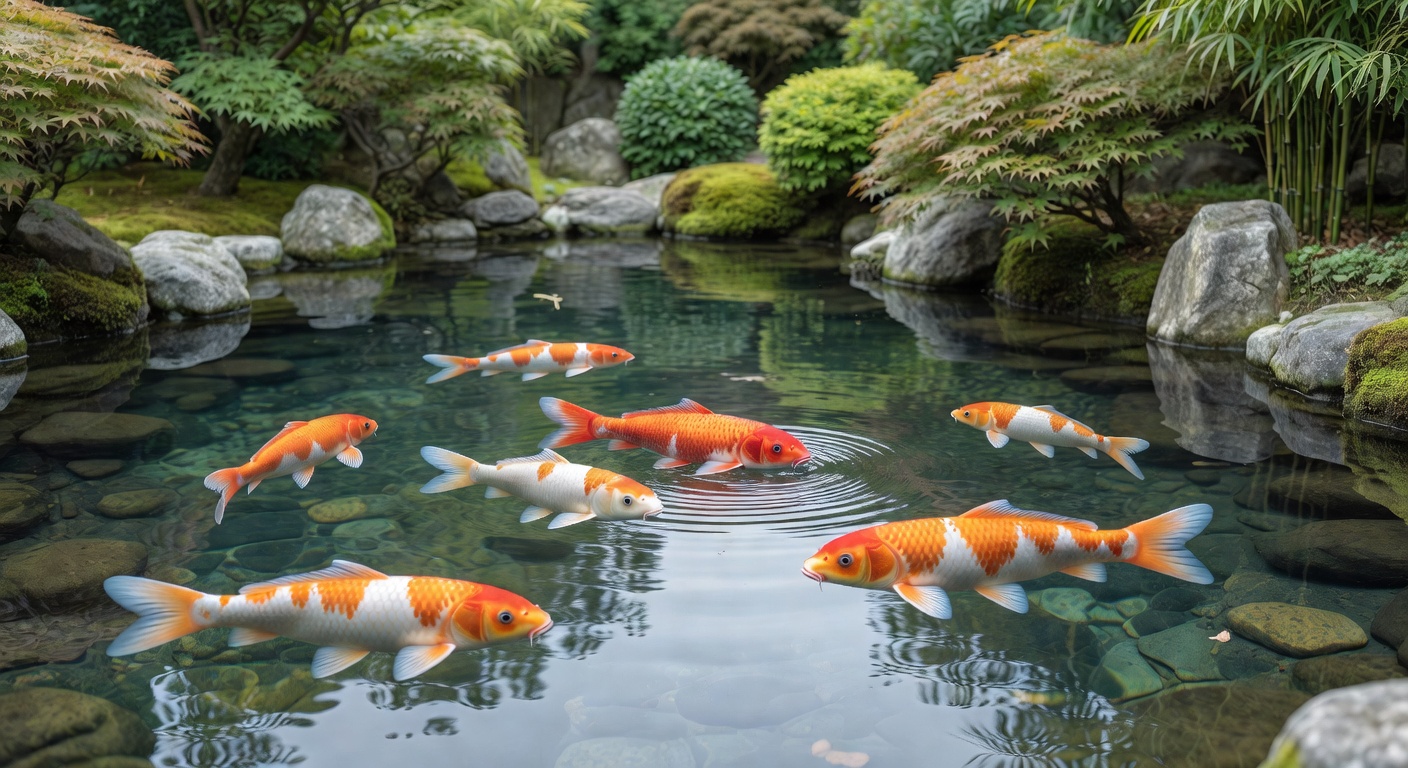
This is not melancholy for its own sake. Rather, it is an acknowledgement that the finite nature of things is precisely what gives them their intensity. The koi fish in a garden pond, moving through water with unhurried purpose, neither hastening nor resisting the current — this image recurs in Japanese aesthetics as a model of graceful acceptance.
Impermanence in Architecture and Design
Japanese traditional architecture takes this philosophy further still. The great Ise Shrine in Mie Prefecture — Japan's most sacred Shinto site — is rebuilt from scratch every twenty years, a practice that has continued for over a millennium. Rather than attempting to preserve an ancient structure indefinitely, the tradition insists on renewal. The rebuilt shrine is always identical in form to its predecessor; yet it is also, always, new.
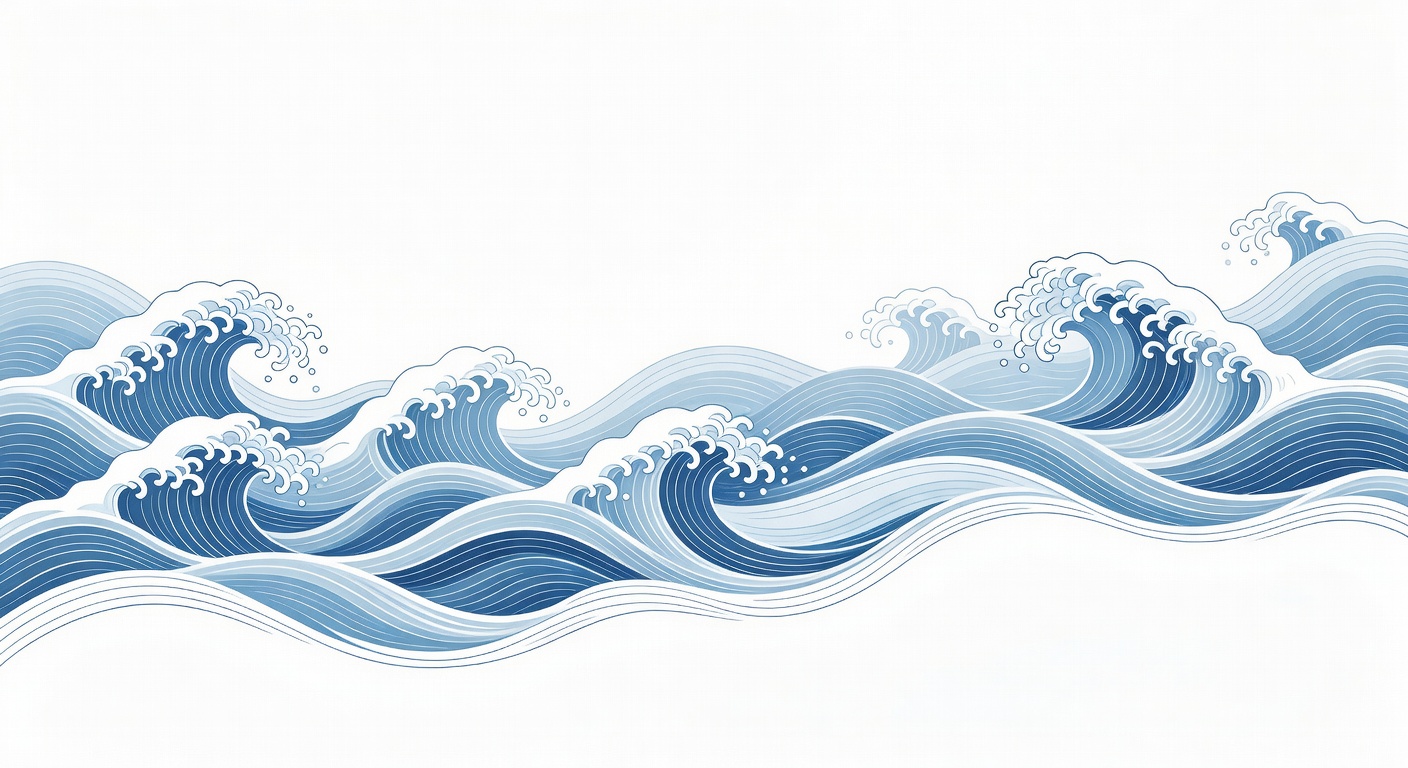
This principle extends to the decorative arts. The Seigaiha pattern — repeated overlapping waves — appears on ceramics, textiles, and architectural details throughout Japan's artistic history. The design captures both continuity and constant change: each wave is the same as the last, yet no two moments in the sea are identical. It is, in miniature, a meditation on impermanence.
A Contemporary Relevance
In an age when preservation, archiving, and the permanent storage of information have become dominant values, Japan's aesthetic tradition offers a counter-perspective. It suggests that some things derive their meaning precisely from their transience — from the fact that they cannot be held, only witnessed.
This is not a counsel of passivity or indifference. Rather, it invites a quality of attention: a willingness to be fully present with what is, in the knowledge that it will not always be so. The koi moves through the water. The blossom falls. The moment passes. In the space that remains, there is something that deserves to be called beautiful.